
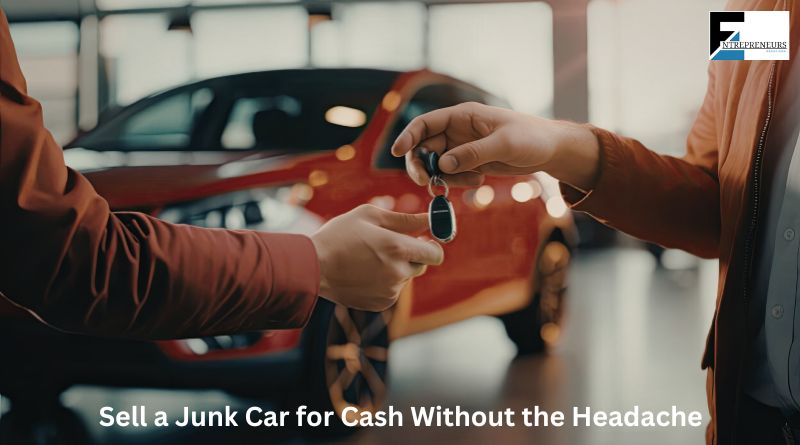
Sell a Junk Car for Cash Without the Headache
That old car sitting there is not just an eyesore. It is a slow leak on your time, your space, and sometimes your money. Maybe it will not start. Maybe it technically runs, but you would not trust it on a short drive. Either way, you are probably stuck in the same loop: you know it needs to go, but the process feels annoying, unclear, and easy to mess up.
The good news is that selling a junk car can be surprisingly simple when you treat it like a quick project instead of a long ordeal. You gather a few details, get an offer that makes sense, schedule pickup, and get paid, then you move on with your life. If you want a concrete example of what a pickup-friendly process can look like, you can peek at byotautoparts.com/ and use it as a reference point while you compare your options.
First, Is It Actually a Junk Car
Before you try to price anything, you need a clear definition, because “old” and “junk” are not the same thing.
The simplest way to decide
A car usually falls into “junk” territory when one of these is true. It cannot be driven safely, it is not reliably operable, or the cost to repair it is more than what the vehicle would realistically be worth afterward. That can include major mechanical failure, severe damage, or a long list of problems that add up to a bad investment.
Why this matters for your payout
Once a car is considered junk, the value often shifts away from “resale as a vehicle” and toward “value in parts and materials.” That mindset is helpful because it explains why even a non-running car can still put money in your pocket. It is not about pretending the car is something it is not. It is about recognizing what is still useful.
The Real Benefits You Get From Selling
There is the obvious benefit, and then there are the ones you notice later when the car is gone.
You get money back without pouring more in
A lot of people keep a dead car around because they already spent money on it. That is understandable, but it is also how you end up paying registration, dealing with storage issues, or throwing cash at repairs that never fully solve the problem. Selling converts a headache into something useful, even if the amount is not life-changing.
You get your space and your peace back
If you have been stepping around a vehicle you do not use, you already know the mental tax it creates. Once it is picked up, the “we will deal with that later” weight disappears. The garage, driveway, or side yard instantly feels more functional.
It can be the cleaner option
When a vehicle is handled by buyers who reuse components and process what cannot be reused responsibly, less ends up wasted. You are not just getting rid of something. You are helping redirect usable materials back into circulation.
The Three-Part Process That Makes This Easy
Most smooth junk-car sales follow the same basic rhythm, and once you know it, the whole thing feels less mysterious.
Part 1: Get a realistic offer
Start by gathering the basics: year, make, model, mileage (even an estimate helps), and the key issues. Then describe the condition honestly. Not “it is perfect except…” but the real story. Does it start? Does it move? Does it have major damage? Are there missing parts? The more accurate you are upfront, the fewer surprises you will face later.
If you want to be smart about it, get more than one offer. Not ten offers that waste your day, but a few so you understand the range. If one number is dramatically higher than the rest, treat it carefully and ask what assumptions are baked into it.
Part 2: Schedule pickup like you are booking a service call
Once you accept an offer, the best scenario is simple: they come to you. Many buyers arrange towing or pickup as part of the deal, and that is where the convenience really kicks in. Choose a time window you can actually be present for, and confirm what you need to have ready.
This is also the moment to confirm whether there are any fees and whether the pickup depends on the vehicle being in a certain condition. For example, if the car is blocked in or the tires are completely flat, it is better to mention that upfront than to hope it is fine.
Part 3: Get paid and close the loop
When the driver arrives, expect a quick inspection that matches your description to reality. If you were honest, this should be straightforward. Payment is typically handled right after that check. What “cash” means can vary. Sometimes it is literally cash, sometimes it is a check, sometimes it is another immediate method. The key is that you should know which one it is before pickup day, not during pickup day.
How to Increase What You Get Without Going Overboard
You do not need to detail the car or spend your weekend fixing it. Small, practical steps matter more.
Compare offers the right way
A higher number is not always a better deal if it comes with conditions. Compare what is included: pickup, any deductions, payment method, and timing. A slightly lower offer that is truly hassle-free can be worth more in the real world than a higher offer that turns into a negotiation at pickup.
Do a five-minute honesty check on your own description
Walk around the car and take note of things you forgot. Missing catalytic converter. Broken windows. Flood damage. A dead battery is not a big deal, but major missing parts can change pricing. The goal here is not to talk yourself into a lower offer. It is to keep the offer you accept from collapsing later.
Consider parts only if you already know what you are doing
Some people make more money selling valuable parts separately. That can be true, but it can also turn into a drawn-out project that leaves you with a half-dismantled car you still need removed. If you are not already comfortable doing it, the simplest path is usually the best path.
Paperwork That Keeps You Protected
This is the part people rush, and it is also the part that prevents future headaches.
Proof you can sell it
In many cases, having the title and matching identification makes everything smoother. If you do not have the title, do not panic, but understand it may limit who can buy it or what steps are required. The important thing is to be upfront early so you do not waste time with buyers who cannot proceed under those conditions.
Clean handoff habits that save you later
Before the car leaves, remove personal items and clear out anything you would not want to lose. Also, keep any written record of the sale. Even a simple receipt with the vehicle details and date is useful.
Depending on how your area handles it, there may also be a form or notification involved after you sell. The goal is simple: you want documentation that shows the vehicle is no longer your responsibility.
Mistakes That Quietly Cost People Money
A junk-car sale is simple, but it is easy to lose value through avoidable missteps.
Taking the first offer out of frustration
It is tempting to accept the first number just to be done. But getting a couple of offers is often the difference between “fine” and “actually worth it.” Even a small increase can feel meaningful when the process is fast.
Stretching the truth about the condition
People do this, thinking it will not matter. It usually matters. If the vehicle is described as running and it cannot move, that is not a minor detail. That is a deal-breaker. Accuracy keeps the process quick.
Not confirming pickup terms
Do not assume towing is included. Do not assume there are no fees. Ask directly and get a clear answer. The sale should feel predictable, not like a surprise bill waiting to happen.
What a Smooth Sale Looks Like in Real Life
A clean process usually looks like this: you spend a short amount of time gathering details, you collect a few offers, you pick the one that feels fair and straightforward, and you schedule pickup. On pickup day, you have your documents ready, you hand over the keys, you get paid, and the car is gone. The “win” is not just the money. It is the speed, the simplicity, and the fact that you did not have to fight your way through it.
Questions People Ask Right Before They Commit
These are the common sticking points that come up at the last minute.
Can I sell a junk car that does not run
Often, yes. Non-running vehicles can still have value, and pickup is commonly part of the process. Just be clear about whether it starts and whether it can roll.
How fast can this happen
If you have your information and documents ready, the timeline can be surprisingly quick. The biggest delays usually come from unclear ownership paperwork or scheduling conflicts.
What if my car has been sitting for a long time
That is common. A car that has been parked for months or years can still be sold. The key is to mention what you know about its condition so the offer is based on reality.
Do I need to fix anything first?
Usually, no. For a junk sale, major repairs rarely make financial sense. Your time is usually better spent on accurate info, comparing offers, and getting the paperwork right.