
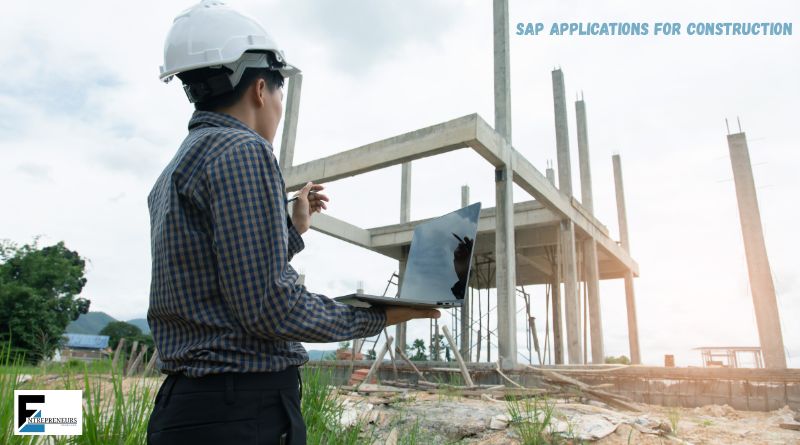
SAP Applications for Construction
The construction industry has always been one of the most complex sectors to manage. Between juggling multiple project sites, coordinating large workforces, managing procurement chains, and keeping a tight grip on budgets, construction companies face operational challenges that most other industries simply do not encounter at the same scale. Over the past two decades, enterprise resource planning (ERP) software has slowly but steadily made its way into construction boardrooms, and SAP has emerged as one of the most powerful platforms driving this transformation. Today, SAP applications for construction are helping firms of all sizes eliminate inefficiencies, reduce project overruns, and build smarter operations from the ground up.
Why Construction Companies Are Turning to SAP
Construction is not a straightforward business. A single infrastructure project can involve dozens of subcontractors, hundreds of procurement orders, shifting regulatory requirements, fluctuating material prices, and tight delivery deadlines that carry financial penalties for delays. Managing all of these moving parts through disconnected spreadsheets, legacy software, or paper-based processes is a recipe for cost overruns and communication breakdowns.
SAP offers a centralized platform where every department — from finance and procurement to HR and project management — can work from the same data in real time. This level of integration is particularly valuable in construction, where decisions made on-site can immediately impact budgets back in the office, and where procurement delays in one region can cascade across an entire portfolio of projects. SAP applications for construction bring discipline and visibility to an industry that has historically struggled with both, giving project managers and executives the tools they need to make informed decisions rather than reactive ones.
Core SAP Modules Relevant to Construction Operations
Project Systems (PS) for End-to-End Project Control
One of the most widely used SAP modules in the construction sector is Project Systems, commonly referred to as SAP PS. This module is specifically designed to help organizations plan, execute, monitor, and close projects with full financial and operational visibility. For construction companies, this means being able to define a project’s work breakdown structure, allocate budgets at each level, track actual costs against planned costs, and generate progress reports that reflect the true state of a project.
SAP PS integrates seamlessly with other SAP modules, which means that when a purchase order is raised for materials on a construction project, the cost is automatically reflected in the project’s financial ledger. When labor hours are logged, they flow directly into the project accounting system. This real-time cost tracking dramatically reduces the risk of budget surprises at the end of a project phase and gives commercial teams the information they need to manage variations and claims effectively.
Plant Maintenance for Equipment and Asset Management
Heavy construction relies heavily on machinery — cranes, excavators, concrete mixers, and a vast fleet of vehicles that represent enormous capital investments. SAP’s Plant Maintenance (PM) module helps construction companies track the condition of every asset, schedule preventive maintenance, manage breakdown repairs, and calculate the total cost of ownership over each machine’s lifecycle.
When equipment is properly maintained and tracked within SAP, project planners can make realistic decisions about resource allocation. They know which machines are available, which are scheduled for service, and which have a history of frequent breakdowns that might make them a liability on a critical-path project. This level of asset intelligence reduces unplanned downtime and extends the useful life of expensive equipment, directly improving profitability.
Materials Management for Smarter Procurement
Material costs typically account for 50 to 60 percent of total project expenditure in construction, making procurement one of the highest-leverage areas for cost control. SAP’s Materials Management (MM) module covers the entire procurement lifecycle — from purchase requisitions and vendor selection through to goods receipt, invoice verification, and payment processing.
For construction firms operating across multiple sites and geographies, SAP MM provides a unified view of all purchasing activity. Category managers can negotiate group-level contracts with suppliers, and site-based procurement teams can call off against those contracts rather than negotiating individually, which eliminates the fragmentation that leads to inflated unit rates. The module also supports inventory management, which helps project teams maintain optimal stock levels of critical materials without tying up excessive working capital in on-site storage.
SAP S/4HANA: The Modern Foundation for Construction Firms
What Makes S/4HANA Different
SAP S/4HANA represents the next generation of SAP’s ERP platform, built on an in-memory database architecture that delivers processing speeds orders of magnitude faster than older systems. For construction companies, this matters because the volume of transactional data generated by active project portfolios is enormous. Cost postings, time entries, purchase orders, goods movements, and payroll transactions accumulate rapidly, and traditional databases can struggle to process and report on this data in real time.
With S/4HANA, construction firms can run complex project profitability analyses, cash flow forecasts, and workforce reports in seconds rather than hours. Finance teams no longer have to wait for overnight batch runs to see the previous day’s cost postings. Project managers can check live budget positions from a mobile device on-site. This speed and accessibility fundamentally changes how people work and how quickly they can respond to emerging issues.
Fiori Apps and the Modern User Experience
One of the longstanding criticisms of SAP was its complex, unintuitive user interface, which required extensive training and often led to poor adoption rates in the field. SAP Fiori, the modern UX layer built on top of S/4HANA, addresses this head-on by offering clean, role-based applications designed for how people actually work. For construction teams, this means site managers can submit timesheets, approve purchase requisitions, and view project dashboards from their smartphones without needing to navigate the full SAP back-end system. This improved accessibility is one of the key reasons why SAP applications for construction are seeing significantly higher adoption rates in recent rollouts compared to previous ERP implementations.
Real Business Benefits Delivered by SAP in Construction
Improved Financial Visibility and Cost Control
Perhaps the most immediately felt benefit of implementing SAP in a construction business is the improvement in financial transparency. Before SAP, many construction firms operated with a significant lag between on-site activity and financial reporting. By the time monthly management accounts were prepared, project managers were already two to three weeks behind on understanding their true cost position.
SAP eliminates this lag by capturing financial transactions as they occur. Goods receipts, subcontractor applications for payment, labor hour postings — all of these feed directly into the project’s financial ledger in real time. Commercial managers can see at any moment how their project is tracking against its budget, which variations have been approved, what claims are in dispute, and what the forecast out-turn position looks like based on current trends. This level of insight enables proactive intervention rather than retrospective damage control.
Streamlined Compliance and Regulatory Reporting
Construction companies operate in a heavily regulated environment. Health and safety legislation, environmental standards, employment law, and tax compliance requirements vary by country and sometimes by region, and managing compliance across a multinational portfolio of projects is a substantial administrative burden. SAP provides structured frameworks for capturing compliance-related data, generating regulatory reports, and maintaining the audit trails that government authorities and clients increasingly require.
For firms operating under public sector contracts, SAP’s built-in controls and reporting capabilities can be particularly valuable in demonstrating compliance with procurement regulations and financial governance standards. The system’s ability to enforce approval workflows and maintain complete transaction histories provides the kind of documentary evidence that supports both external audits and internal governance processes.
Workforce Management and Productivity Tracking
Labor is the other major cost driver in construction alongside materials, and managing a large, often transient workforce spread across multiple project sites presents real challenges. SAP’s Human Capital Management (HCM) and SuccessFactors modules help construction companies manage employee records, track certifications and qualifications, process payroll, and monitor workforce productivity across sites.
Integration between workforce management and project systems means that labor costs flow automatically into project accounts based on time entries, eliminating the manual reconciliation work that often consumed significant administrative effort under legacy systems. Project managers can see not only how much labor has been consumed against plan but also how productivity compares across different teams and sites, providing actionable insights for resource optimization.
Challenges to Consider Before Implementation
Implementing SAP in a construction business is not a simple undertaking, and organizations that approach it without adequate preparation often struggle. Construction companies have highly specific business processes — many of which are project-driven rather than process-driven — and configuring SAP to reflect these accurately requires deep industry expertise on the implementation team.
Change management is another critical consideration. SAP changes the way people work at every level of the organization, and resistance from site teams, project managers, or finance staff who are comfortable with existing tools can undermine even a technically excellent implementation. Companies that invest in comprehensive training programs, engage key stakeholders early in the design process, and appoint internal SAP champions typically achieve far better adoption outcomes than those that treat the system go-live as the finish line rather than the starting point.
Data quality is also a common stumbling block. SAP is only as good as the data that flows through it, and construction companies that have historically maintained their project, asset, and vendor data in disparate systems often discover significant data cleansing work is required before migration can take place.
The Future of SAP Applications for Construction
The convergence of SAP with emerging technologies is opening new possibilities for the construction sector. SAP’s integration with Internet of Things (IoT) platforms means that sensor data from construction equipment, environmental monitoring systems, and structural health monitoring devices can flow directly into SAP, enabling predictive maintenance decisions based on real-world operating conditions rather than fixed schedules.
Artificial intelligence capabilities embedded within S/4HANA are beginning to support demand forecasting for materials, anomaly detection in financial data, and intelligent scheduling suggestions based on historical project performance. As these capabilities mature, SAP applications for construction will increasingly move from being a system of record to a system of intelligence — not just capturing what has happened, but actively guiding better decisions about what should happen next.
Construction companies that are evaluating their digital transformation roadmaps would do well to examine how SAP fits within their long-term strategy. The platform is not right for every organization, and there are legitimate alternatives at various price points. But for mid-sized to large construction firms managing complex, multi-site project portfolios, the depth of functionality, the maturity of the ecosystem, and the ongoing investment SAP is making in industry-specific capabilities make it a compelling foundation for the next era of construction management.