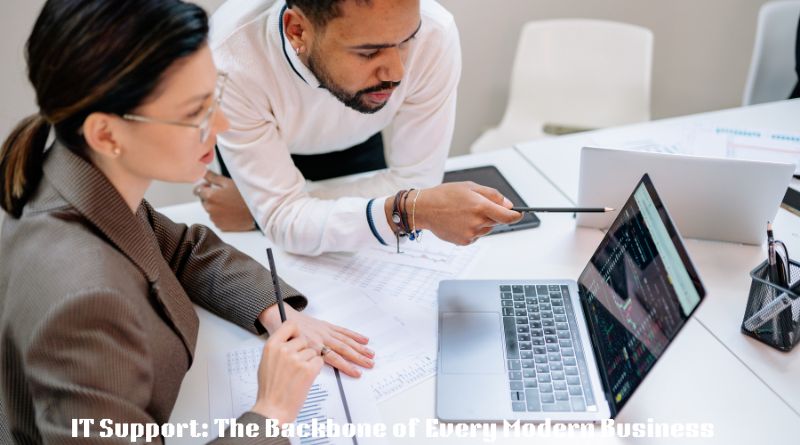
IT Support: The Backbone of Every Modern Business
Running a business today without reliable IT support is a bit like trying to drive a car without an engine—you might look the part, but you’re not going anywhere fast. Whether you’re a growing starup or an established enterprise, the technology you rely on every single day needs to work, and when it doesn’t, the consequences can ripple through your entire operation. Downtime costs money. Frustrated employees lose productivity. Customers notice when service slips. That’s exactly why IT support has moved from being a nice-to-have to an absolute necessity for businesses that want to stay competitive, secure, and efficient in an increasingly digital world.
What IT Support Actually Means for Your Business
A lot of people hear “IT Support” and picture someone fixing a printer or resetting a password. And while those things are certainly part of it, modern IT Support is far broader and more strategic than most people realize. At its core, IT support is about making sure every piece of technology your business depends on—from your network infrastructure and cloud systems to your software applications and end-user devices—is running as it should be, as often as possible.
Good IT Support means having someone (or a team) available when things go wrong, but it also means doing the proactive work that keeps things from going wrong in the first place. It includes monitoring your systems around the clock, applying security patches before vulnerabilities can be exploited, managing your hardware and software lifecycles, and giving your staff the technical guidance they need to do their jobs without constant interruption. When IT Support is working well, most employees don’t even notice it—they just notice that everything works.
The Rise of Managed IT Solutions
Over the past decade, businesses have increasingly turned away from the traditional break-fix model—where you call someone only after something has already gone wrong and moved toward managed IT solutions. This shift has been driven by the simple reality that waiting for problems to occur is far more expensive than preventing them.
Managed IT solutions typically involve partnering with a managed service provider (MSP) who takes on responsibility for your IT environment on an ongoing basis. Rather than billing you by the hour when disaster strikes, MSPs operate under a proactive model, monitoring your systems continuously, resolving issues often before you even know they exist, and aligning your technology strategy with your broader business goals. For many small and mid-sized businesses in particular, this arrangement effectively gives them access to an enterprise-level IT team at a fraction of the cost of building one in-house.
The value of Managed IT Solutions goes well beyond just keeping the lights on. A good MSP brings strategic insight to the table, helping you plan for growth, evaluate new technologies, migrate to the cloud, and ensure your data is protected by robust backup and disaster recovery protocols. It’s the difference between having technology that reacts to your business and technology that actually supports it.
Why Cybersecurity Can’t Be an Afterthought
One of the most critical areas where IT Support proves its worth is cybersecurity. The threat landscape has changed dramatically in recent years. Ransomware attacks, phishing campaigns, data breaches, and insider threats are no longer rare events that happen to large corporations — they target businesses of every size, often specifically because smaller organizations are seen as easier targets with weaker defenses.
Effective IT Support includes a comprehensive approach to cybersecurity that covers everything from firewall management and endpoint protection to employee training and incident response planning. It means staying current with evolving threats, regularly auditing your security posture, and ensuring that compliance requirements — whether that’s HIPAA, GDPR, or industry-specific regulations — are consistently met. A data breach doesn’t just cost you money in the immediate aftermath; it damages your reputation, erodes customer trust, and can have lasting legal and financial consequences that take years to fully recover from.
When cybersecurity is baked into your IT Solutions rather than bolted on as an afterthought, you’re building a fundamentally more resilient business.
Help Desk Support and the Day-to-Day Experience
While strategic IT planning and cybersecurity are critical, let’s not underestimate the everyday value of good Help Desk support. The experience your employees have when they run into a technical problem — how quickly their issue is acknowledged, how clearly it’s communicated, how fast it’s resolved — has a direct impact on morale, productivity, and how people feel about their workplace.
A well-run Help Desk, whether it’s staffed internally or managed by an external IT Support provider, is organized around service levels and response times. It tracks recurring issues so patterns can be identified and addressed at the root level rather than just repeatedly patched over. It documents solutions so knowledge is retained and issues can be resolved faster the second time around. And it communicates clearly with non-technical staff in language they actually understand, rather than drowning them in jargon that leaves them more confused than when they started.
For businesses with remote or hybrid workforces, this kind of accessible, reliable Help Desk support is even more important. When someone working from home can’t connect to a company system or is locked out of a critical application, they need to know help is available and responsive — not that they’re on their own until someone in the office notices a problem three hours later.
Cloud Services and the Changing IT Landscape
Cloud technology has fundamentally changed what IT Solutions look like for modern businesses. The shift to cloud-based platforms — whether that’s moving email and collaboration tools to Microsoft 365 or Google Workspace, hosting applications on AWS or Azure, or using cloud-based storage and backup solutions — has made businesses more flexible, more scalable, and often more secure than relying on aging on-premises hardware.
But cloud migration and cloud management is not without its complexity. Moving to the cloud requires careful planning to ensure that nothing is lost in the transition, that new systems integrate properly with existing tools, and that employees are trained and supported through the change. Once in the cloud, ongoing management is still required — monitoring usage, managing licences, controlling costs, and ensuring that security configurations remain appropriate as your business evolves.
This is where IT Support plays a pivotal role. Rather than leaving cloud decisions to individual departments or expecting staff to figure things out on their own, having professional IT Solutions guidance ensures your cloud strategy is cohesive, cost-effective, and aligned with your actual operational needs. The cloud is a powerful tool, but like any tool, it works best in skilled hands.
Choosing the Right IT Support Partner
Not all IT Support providers are created equal, and choosing the right partner for your business is a decision that deserves careful consideration. The right MSP or IT Solutions provider will take the time to understand your business — not just your technology — and tailor their approach accordingly. They’ll be transparent about their service levels and response times, clear about what’s included in their support agreements, and genuinely invested in your long-term success rather than just closing a service contract.
Look for a provider with experience in your industry, a proactive approach to monitoring and maintenance, and a clear methodology for security and compliance. References and case studies matter. So does cultural fit — if your IT Support team communicates poorly or doesn’t listen well, even technically excellent work will create friction rather than solve problems.
The best IT Support relationships feel less like vendor arrangements and more like a true extension of your team. Your provider should understand your goals, anticipate your needs, and be a trusted voice when major technology decisions are on the table.
The Bottom Line
Technology isn’t going away, and neither is the complexity that comes with it. As businesses grow, the systems they rely on become more interconnected, the threats they face become more sophisticated, and the stakes around uptime and security continue to rise. In this environment, IT Support isn’t a cost center — it’s a strategic investment in your ability to operate, compete, and grow.
Whether you’re exploring Managed IT Solutions for the first time or reassessing your current IT Support arrangements, the right moment to prioritize your technology foundation is always now — before a problem forces the conversation. The businesses that treat IT as a strategic pillar, rather than an afterthought, are consistently better positioned to handle whatever comes next.